

Available Trip Departures / Start Dates
-
Available Available PackagesFridayMay 1, 2026FridayMay 8, 2026$1,00016Available
Trek the Inca Trail of the Middle East,This is THE Jordan walking holiday following the Jordan Trail
-
 Bus, Car
 -
1100
-

-
-

-

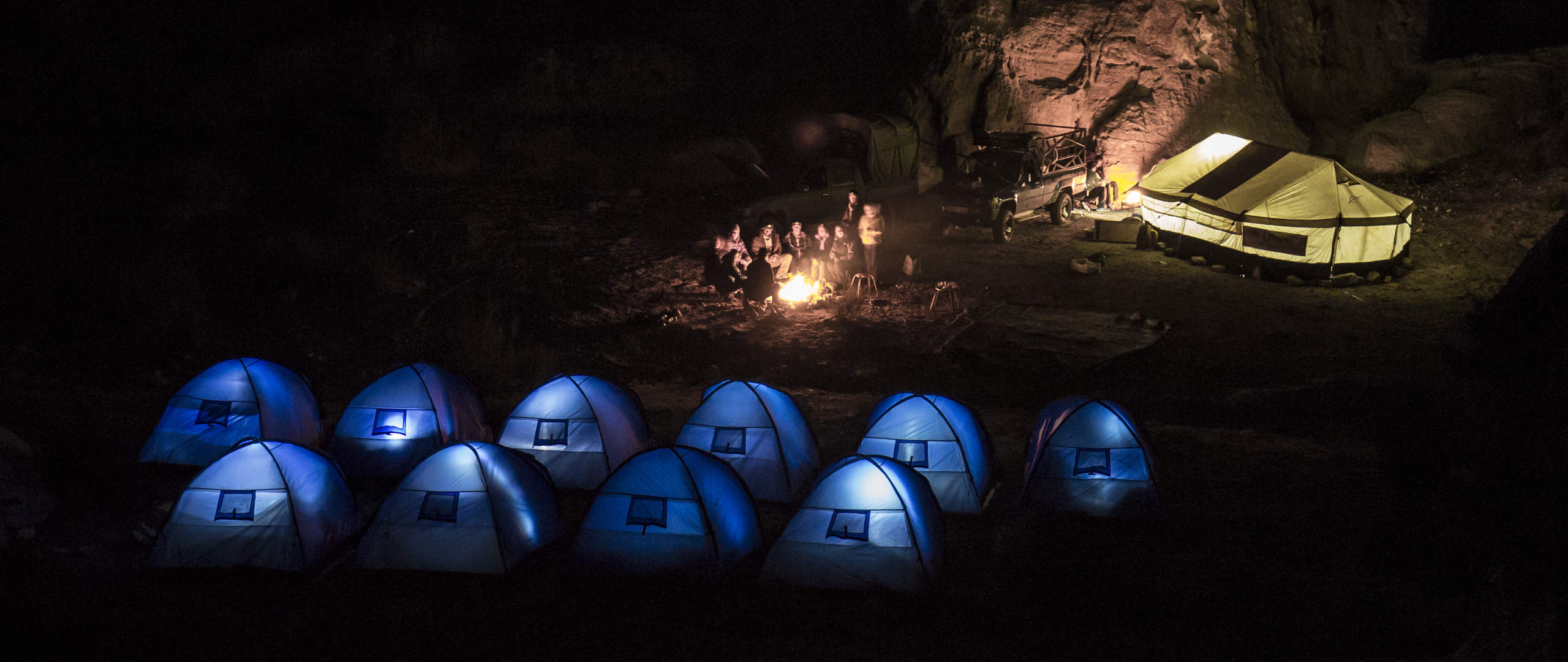
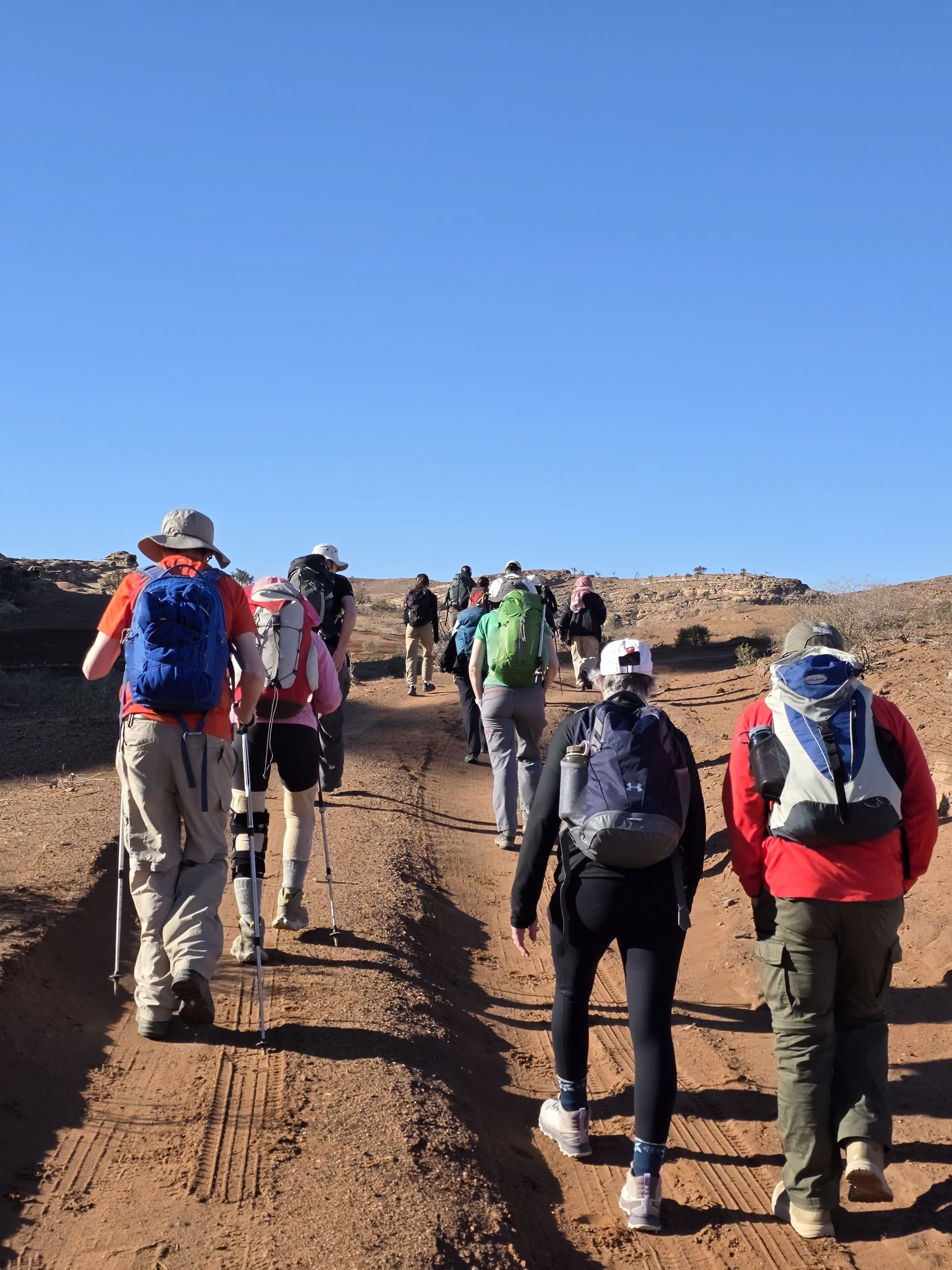
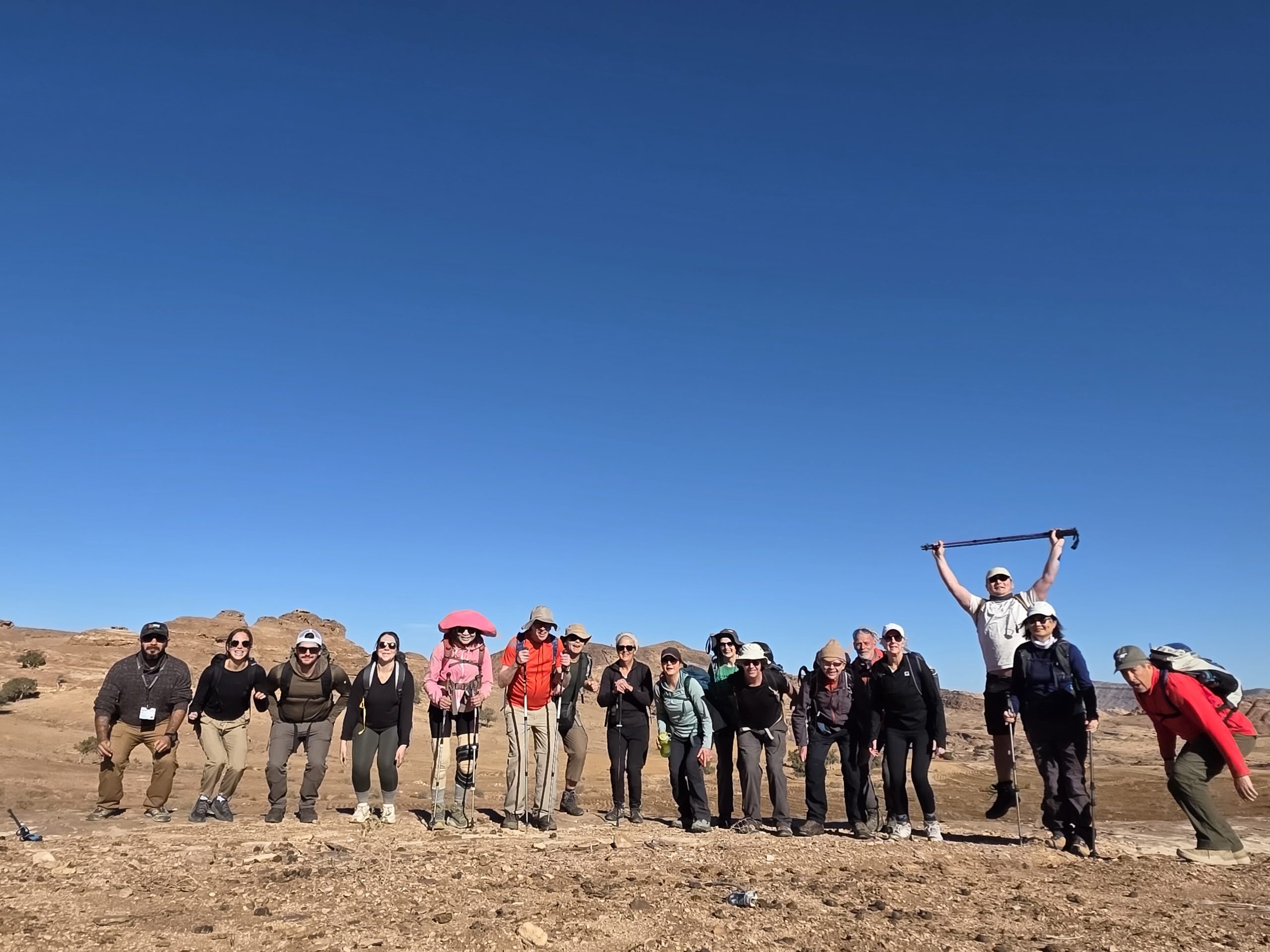
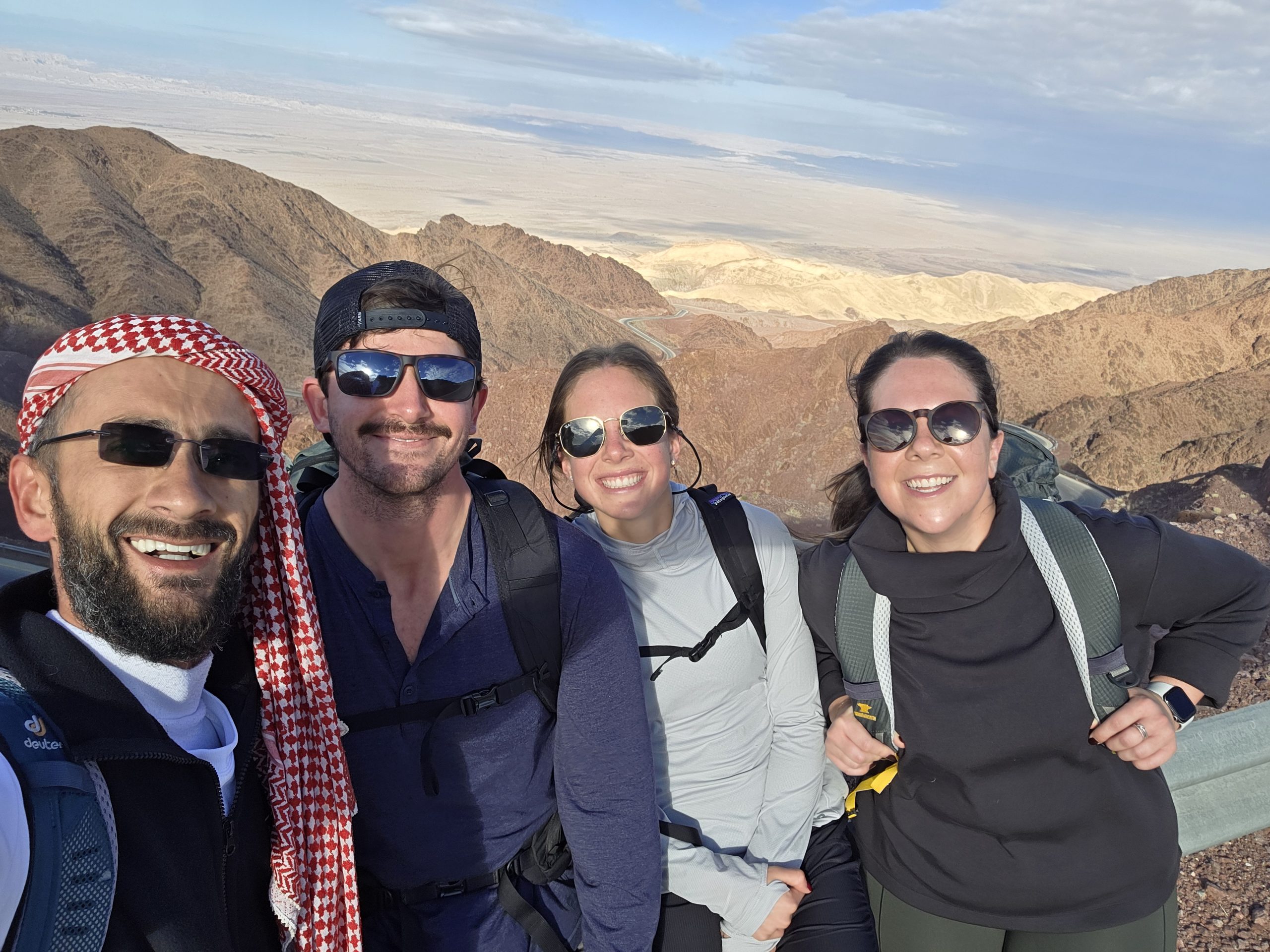
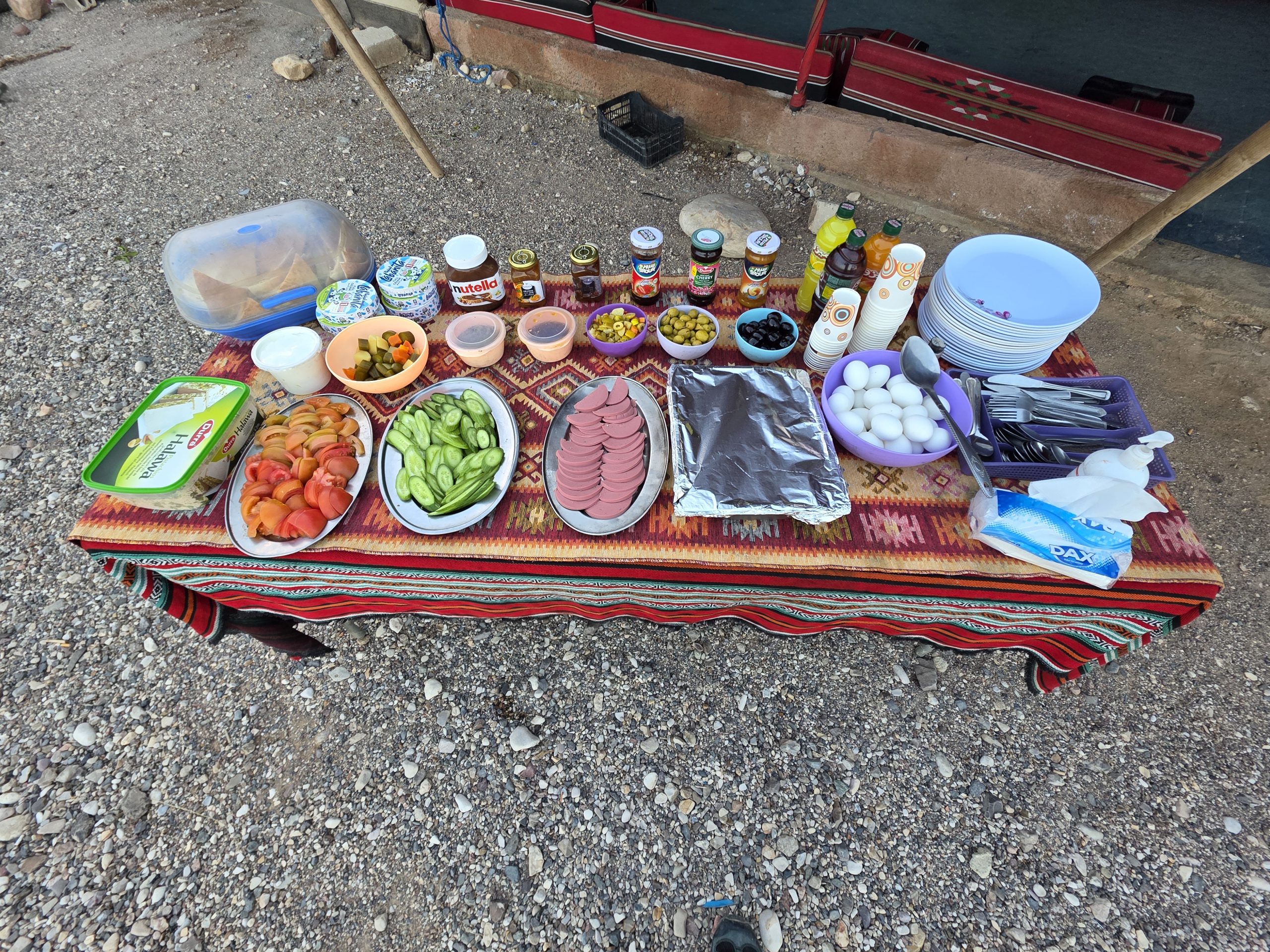
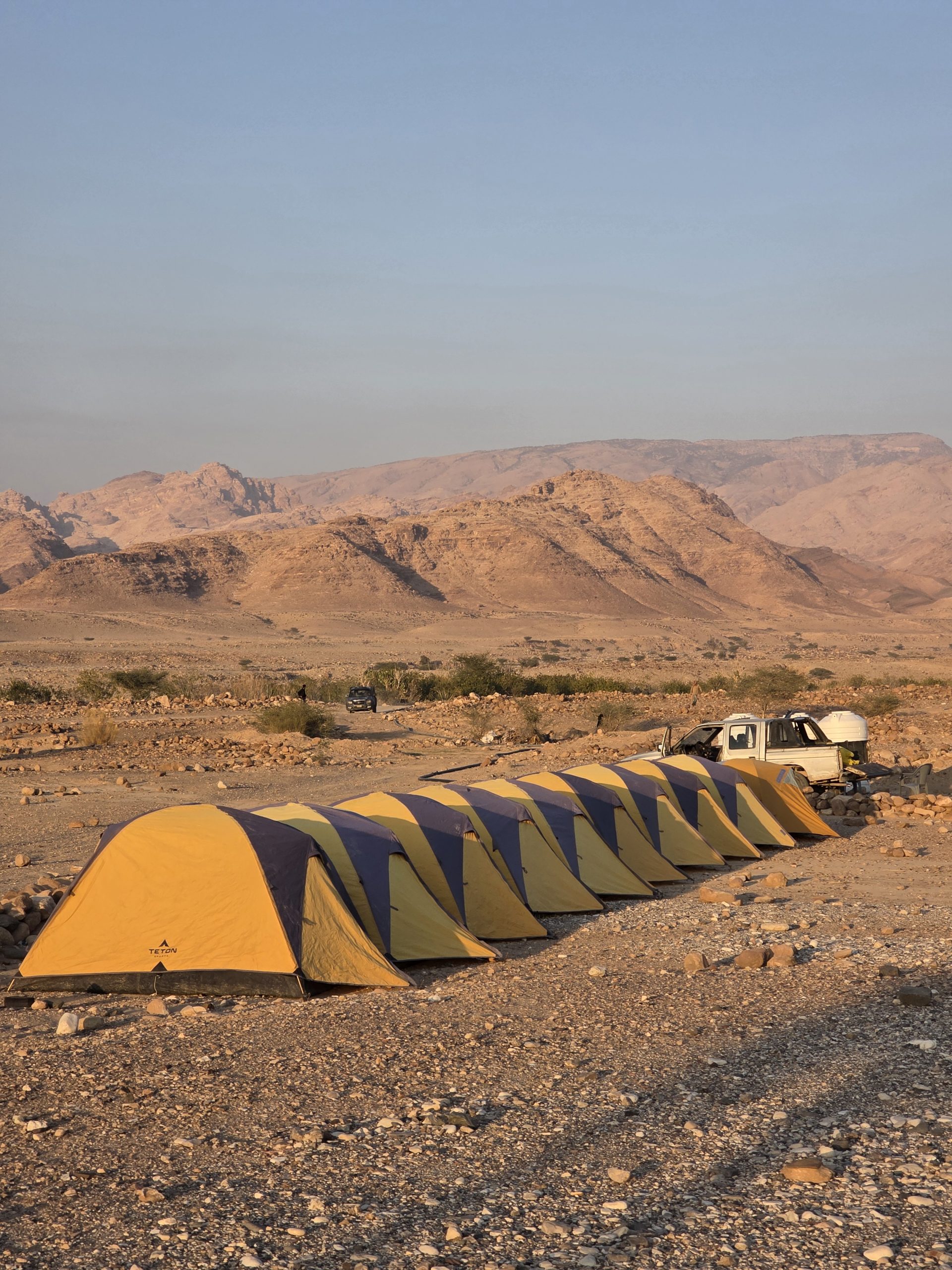
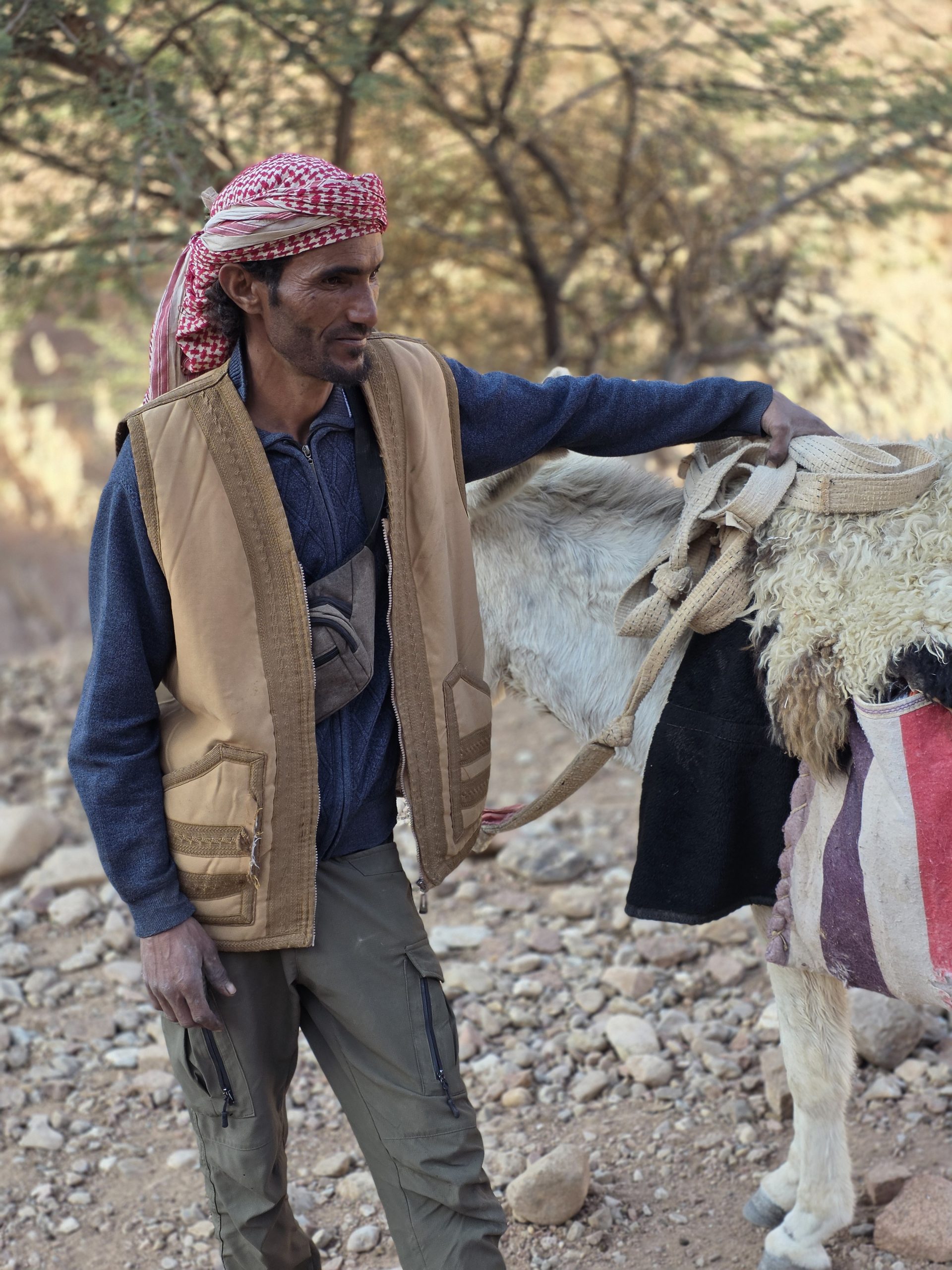
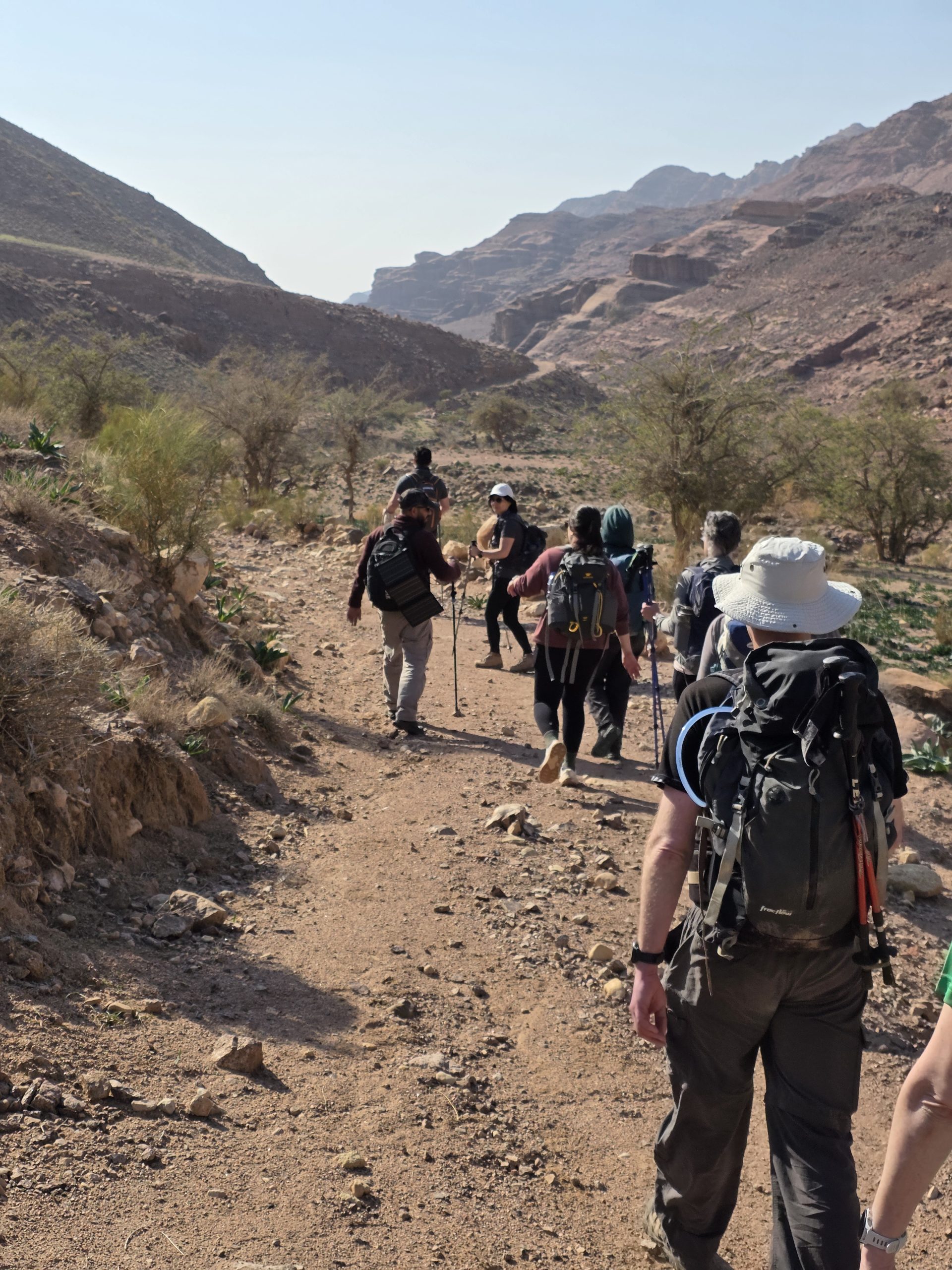
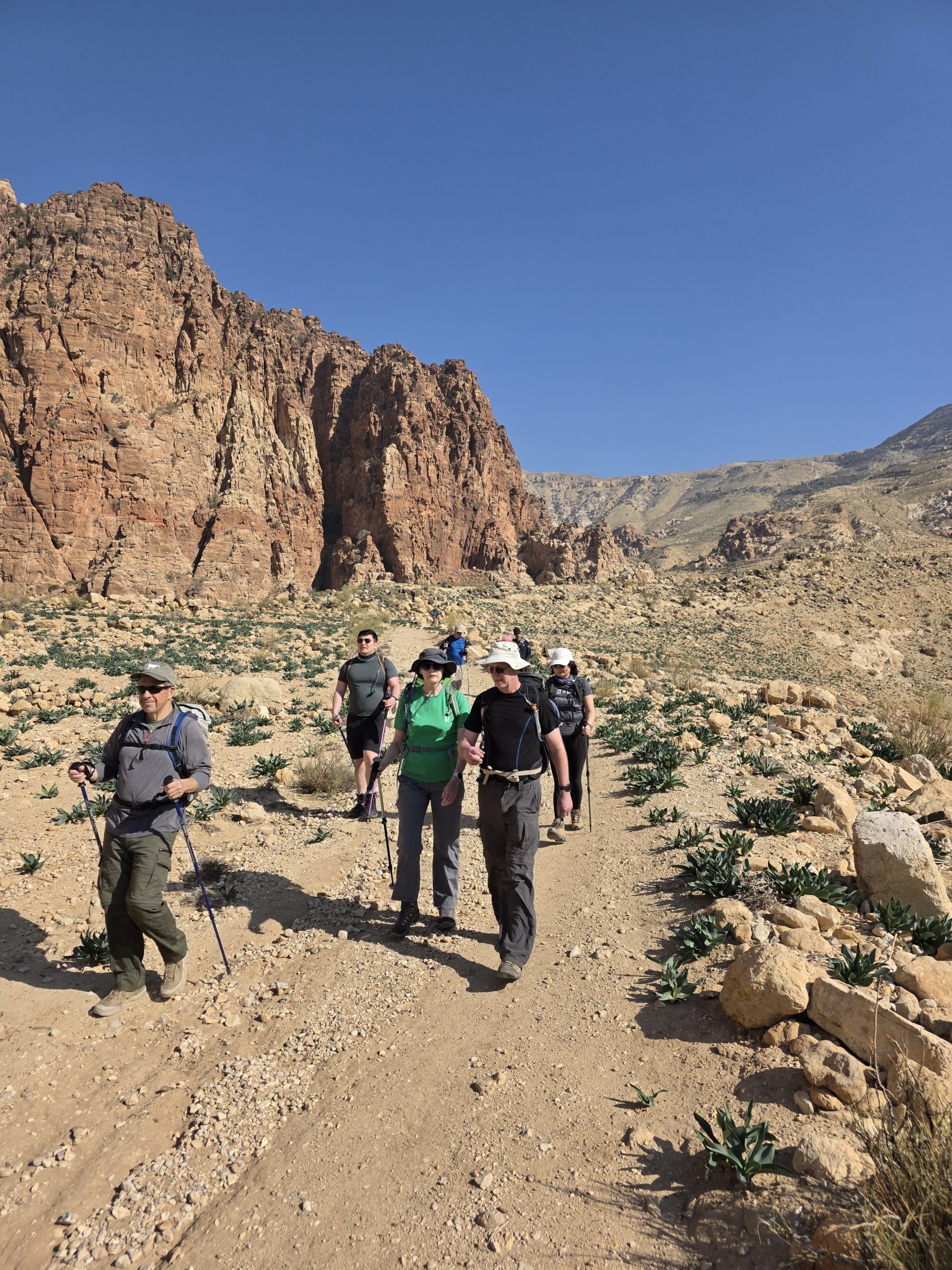
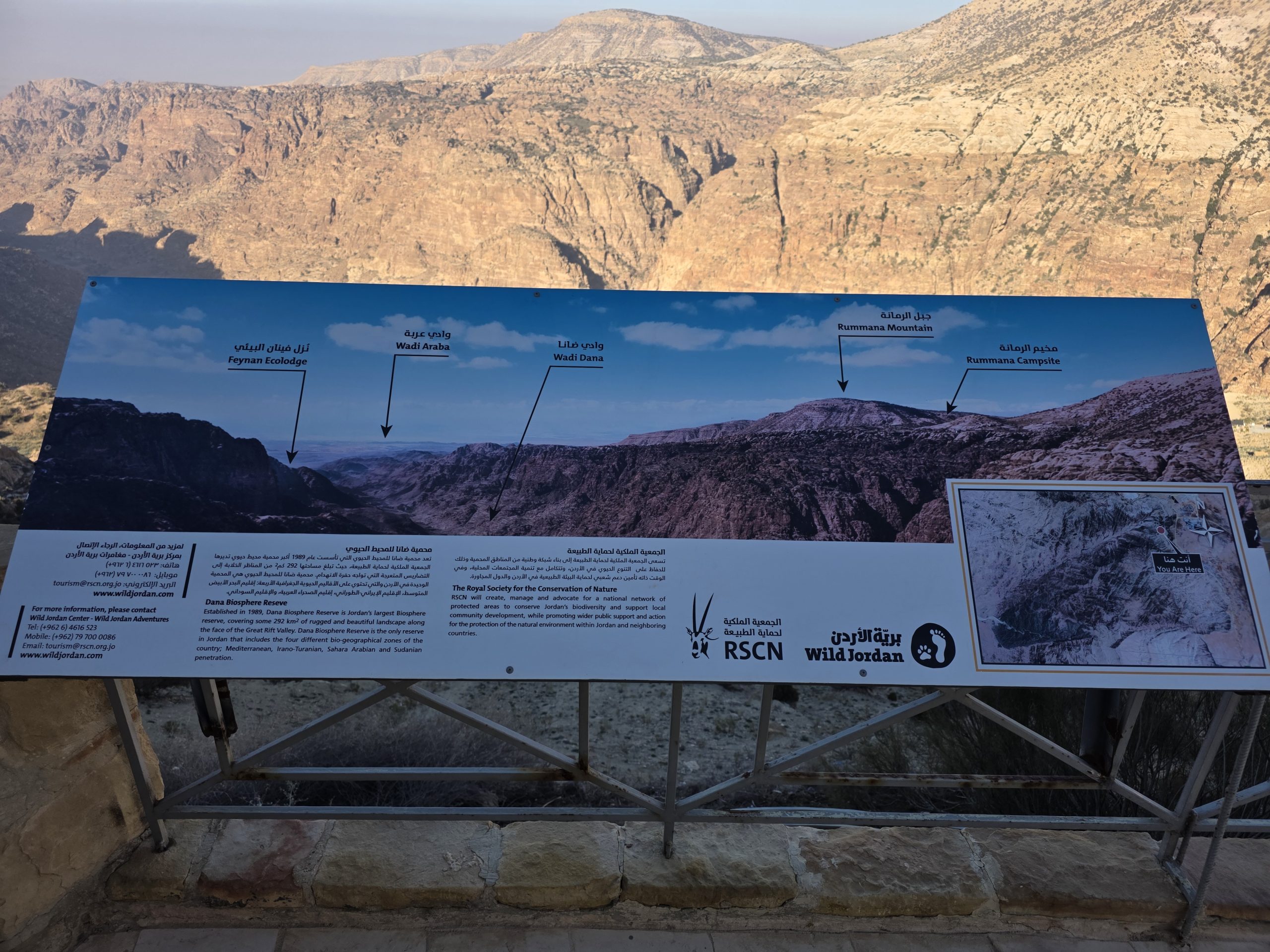
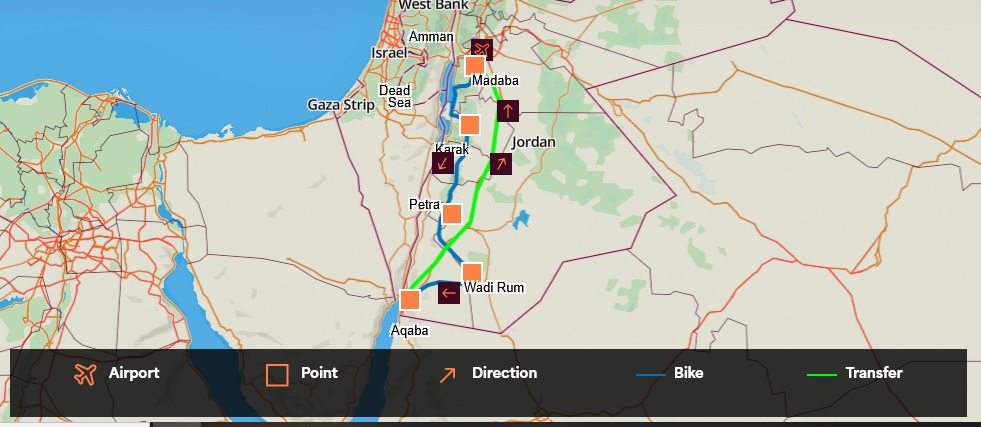
This excellent trekking holiday in Jordan takes us from the Dana Reserve, southwards to the ancient ‘Rose-Red City’ of Petra. This trek has rapidly gained a reputation as one of the finest in the Middle East. Six days of trekking takes us through the most rugged country in Jordan, straddling the edge of the great Rift Valley. Starting out from Wadi Feinan in the Dana Nature Reserve, the trek takes us on hunters’ trails through deep gorges and across high ridges, climbing gradually from around 300 metres at Feinan to around 1100 metres at the high viewpoint above Petra. Nights will be spent camping Bedouin-style with the local guide and crew. Crossing a final escarpment, we reach the spectacular ‘Monastery’, which heralds our arrival at Petra – one of the world’s ‘New 7 Wonders’. The route from Dana to Petra is now part of the ‘Jordan Trail’ which spans the length of this interesting and diverse country. The ‘Jordan Trail Trail is a 400-mile (650 km) hiking trail that runs from Umm Qais in the north to Aqaba in the south and the Dana to Petra section is probably the most beautiful part. This great adventure follows in the footsteps of many explorers and is a magical week of discovery, walking and above all, Jordanian hospitality.
Highlights
- Walk amongst sculpted sandstone following the most famous section of the Jordan Trail
- Trekking the new 'Inca Trail' of the Middle East
- One of the World's Best Hikes by National Geographic
- Walking amongst sculpted sandstone canyons of Jordan
- Explore the wonders of the `Rose-Red City` of Petra
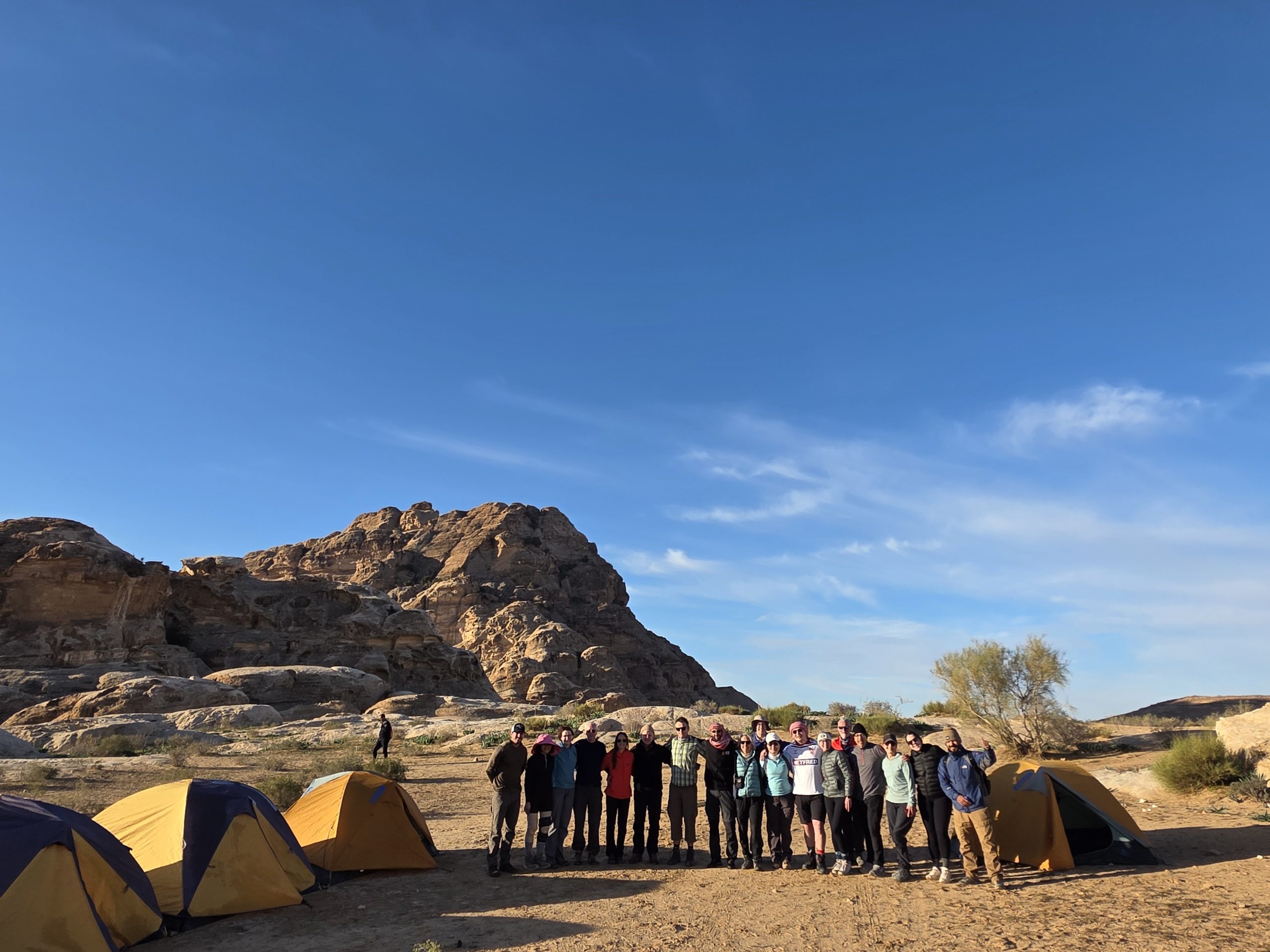
- Camping Bedouin style under the desert stars
- Group size 6 to 16
Itinerary
Rendezvous at the group hotel in Madaba. Two group transfers will be arranged from Amman Airport to the hotel in Madaba. These transfers will meet the arrival of the Royal Jordanian and British Airways flights from the UK and will normally depart from the airport at around 2300 hours on Day 1 of the trip itinerary and 0100 hours of Day 2 of the trip itinerary. Our representative will accompany the group on the 30 minute journey to the hotel. As most people will have taken their evening meal during the flight, dinner is not provided on this day.
We will make an early start for the drive southwards to the Dana Nature Reserve. Here, we meet our trek crew and trekking guide set off on a first day's walk which will take 6 hours including a stop for lunch. The walk from Dana to Feinan is essentially downhill with the initial 800 metre / 2650 foot decent taking place in the first hour of the walk. After this, the route levels out and we can enjoy a far more gentle walk through a wide open valley flanked by the Dana Mountains. Arriving in Wadi Feinan, we set up our first camp of the trip. Meals included: Breakfast, Lunch, Dinner (B, L, D)
This is another 6-hour walking day, which will take us across classic ‘hamada' landscape - dry, rock-strewn desert, with little sand. The route is quite level and there are spectacular views of the high mountain ranges to the east and the expansive Wadi Araba Desert stretching out to the west. Although the terrain is essentially flat, there are several small wadis (dry valleys), that must be crossed throughout the day. We pass both Byzantine and Nabatean ruins during the course of today's walk and our local guide will point these out. We set up camp for the night in Wadi Barwas. (B, L, D)
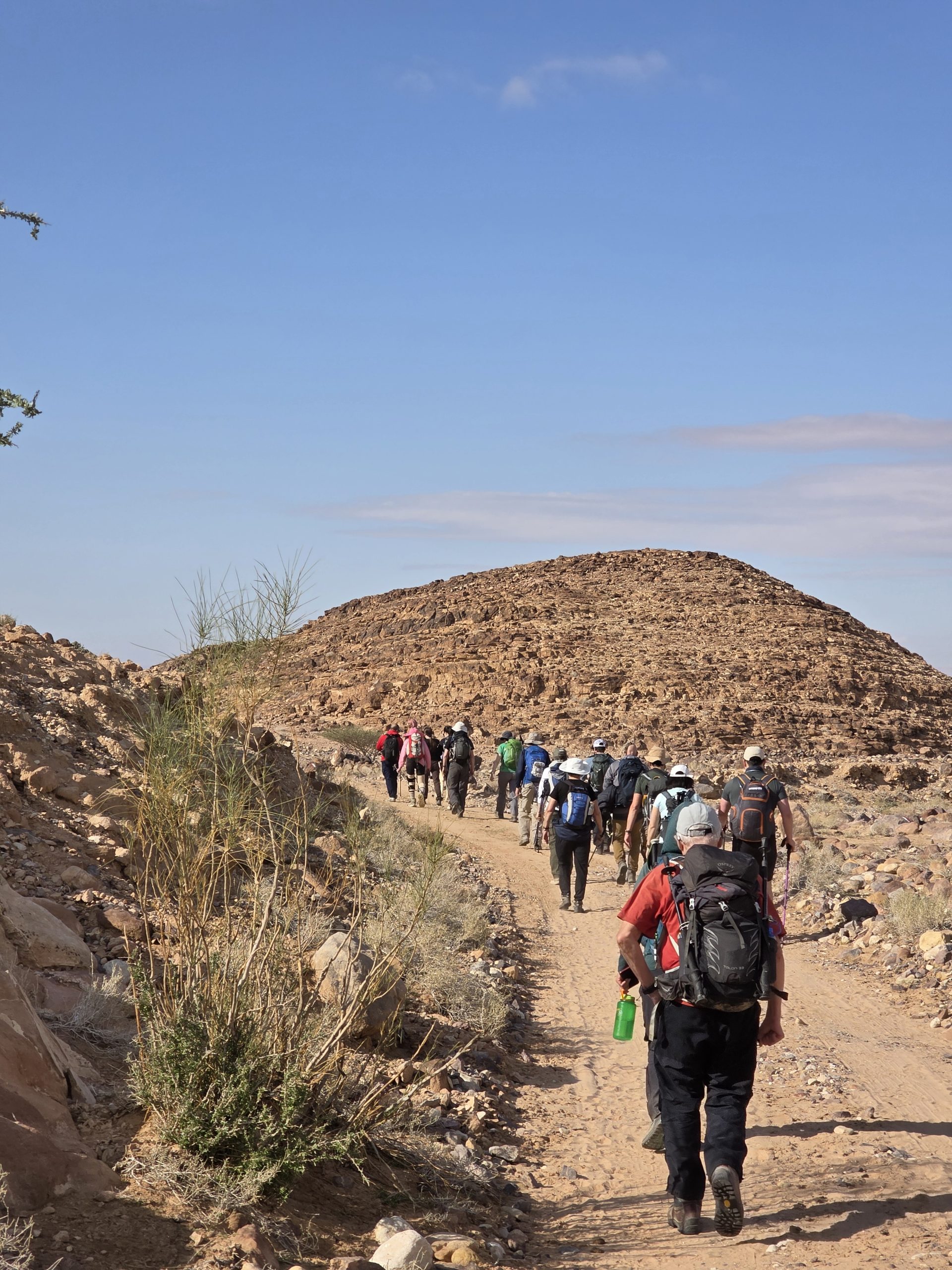
Leaving the stony ‘hamada' desert behind, there is a steep ascent across rocks and small boulders which eventually leads to a twisting goat herder's track. The initial uphill section takes approximately 3 hours. The track leads up into the mountains through a narrow and dramatic valley with wonderful views eastwards towards the Wadi Araba Desert. This is a steep and challenging section of the route, but extremely rewarding, as we finally reach the top of a high saddle. The descent to the river valley beyond is on a well-defined trail through rocky surroundings. There are views ahead of the next day's route. On reaching the dry river bed, we turn upstream for half an hour to our camp at Ras el Feid. (B, L, D)
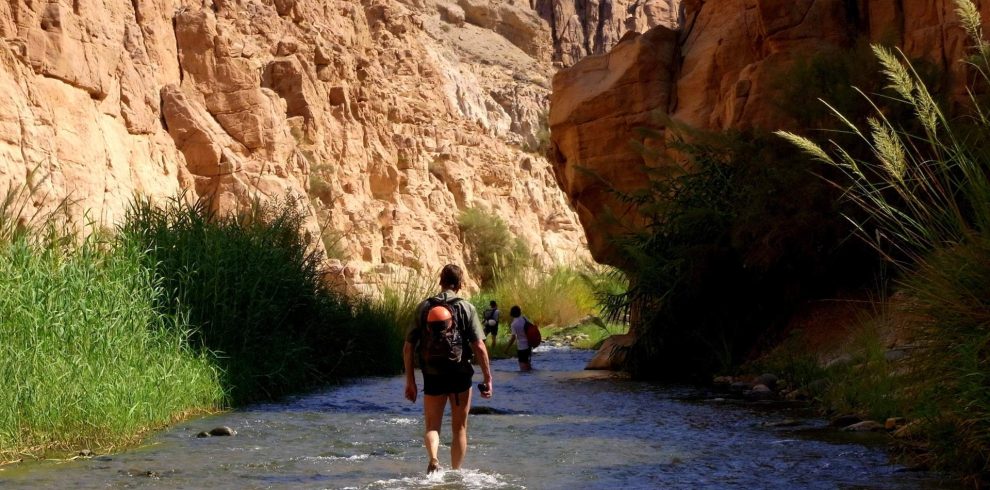
We retrace our route along the riverbed, before turning off on a Bedouin trail that traverses a rocky valley side, gradually ascending by way of dry wadis and indistinct cols. This part of the path is particularly challenging, becoming less well-defined, with some easy scrambling to overcome the largest obstacles. This section lasts approximately 2 hours and eventually descends to a riverbed with perennial water. Look out for the elusive ibex in this remote area. The trail continues along the wadi floor and gently climbs up into the pale coloured sandstone mountains of the Petra region. The climb from the valley to the escarpment (where Petra is situated) is gentle and beautiful with a slight uphill climb towards the end across bare rock slabs. We camp at the col of Shkaret Msei'd. (B, L, D)
Leaving the campsite at Shkaret Msei'd the scenery changes dramatically. We leave the narrow, confining wadis behind and find ourselves amongst wide-open sandstone hills that have something of the feel of a moonscape. The rock is smooth and soft and despite there being no apparent trail the terrain is easy to negotiate, with wide tracks and walkways. The Nabatean influence is apparent here and the first cut steps can be seen. The trail passes through Bedouin encampments, before reaching another rocky area where the track once again becomes indistinct, with interesting route-finding and easy scrambling. We descend into Little Petra using a little used route. The splendour of Little Petra provides an insight into what lies ahead at the main Petra site. From the main entrance of Little Petra, we make our way towards Beidha with evidence of modern human settlement in the form of jeep tracks. (B, L, D)
We will say goodbye to our local trekking guide and crew this morning and we continue with our guide. The walk from here to Petra will take between 2 and 3 hours, with the initial walk across open farmland. The route then follows a well-defined mountain track with fantastic views across to the Araba Desert, some 100 km / 60 miles away. The views are impressive and with the exception of one short (2 metre) section a head for heights is not necessary. The walk into Petra is magnificent and is the culmination of 5 days of hard walking. The initial glimpse of the top of the Monastery, as it comes into view through the mountains, has a similar effect of the first glimpse of the Treasury from the Siq. We will then trek down from the Monastery and exit Petra by the secondary Siq before re-entering the site through the main Siq so you get to see the most famous view of Petra as though you are entering for the first time. After our sightseeing visit to Petra, we overnight at a hotel in nearby Wadi Musa. (B, L,D)
After an early breakfast we transfer by private vehicle (3hrs) to Amman International Airport. Our services end on arrival at the airport. However if you would like to extend your visit in Jordan to visit the Red Sea, the Dead Sea or Jerash, please contact our team of adventure travel consultants (B).
We wish you a safe homeward journey and hope to see you again in Jordan soon.
What's included
- An experienced local Jordanian tour guide
- Bedouin trekking guide
- Timed Amman Airport transfers at the beginning and end of the trip
- All land transport involved in the itinerary
- All accommodation as described in the trip dossier
- Meals as detailed in the Meal Plan
- Guided sightseeing tour of Petra including entrance fees
- Entrance fee for Dana Reserve
- A full service on trek including food and all equipment (excluding personal equipment)
What's not included
- Travel insurance
- Visas
- Some meals as detailed in the Meal Plan
- Tips for local staff including the local guide and drivers
- Miscellaneous expenses - drinks and souvenirs etc.
Available Trip Departures / Start Dates
-
Available Available PackagesFridayMay 1, 2026FridayMay 8, 2026$1,00016Available
The following is a basic checklist to help you with your packing. We recommend using the layering principle of clothing for varying climatic conditions. As a general rule, you should always try to keep the weight of your equipment to a minimum.
You must bring the following items:
2/3 season sleeping bag *
Hiking boots/Approach shoes
Water bottles – 1 litre/1 quart x 2 (2 litres total)
Training shoes or sandals for sightseeing and camp use
Socks
Trekking trousers / pants
Lightweight waterproof overtrousers / rainpants
Underwear
Travel pants
At least 1 long sleeve shirt with collar (for sun protection)
T-shirts
Warm jacket (eg. Fleece)*
Lightweight windproof / waterproof jacket
Sunhat
Warm hat (for chilly evenings in the desert)
Sunglasses
Daypack of approx. 30 litres / 1800 cubic inches capacity
Headtorch / headlamp with spare bulb and batteries
Sun protection (including total bloc for lips, nose etc.)
Lighter/matches – for burning toilet paper
Washbag and toiletries
Insect repellant
Antibacterial handwash (note that washing water can be limited in the desert)
Basic First Aid Kit including: A broad spectrum antibiotic, antiseptic cream, throat lozenges, diarrhoea treatment (Imodium), painkillers, plasters and blister treatment, Insect repellent, and re-hydration salts (Dioralite).
The following items are optional
Shorts**
Small towel
Sleeping bag liner
Thermarest (a foam mattress is provided)
Trekking poles
Pocket-knife (note: always pack sharp objects in hold baggage)
Repair kit – (eg. needle, thread, duct tape)
Small padlock (to lock your KE trek bag)
Camera, film / memory cards, batteries
Swimming shorts/costume (if extending at the Red or Dead Sea)
Spare laces
Notes
*For the November – February trips when night-time temperatures can fall below freezing in the desert, we recommend a 4 season sleeping bag, a warmer jacket such as a down-filled jacket, and thermal baselayers.
**As Jordan is an Islamic country, modest dress is preferable in the towns and cities. Shoulders should be kept covered, and full-length trousers/skirts are recommended. Knee-length shorts are OK once on trek.
During the trip your baggage will be carried by bus and by 4WD vehicles. The only baggage weight limit is that imposed by the airline. However, we ask that you restrict your luggage to one main bag plus a small daypack. In general we recommend that you travel as light as possible as this will make transiting between airports and carrying your bag to hotel rooms a lot easier for you. You may find that wheeled luggage is more convenient on a trip of this nature.
Temperatures in Jordan can be hot, with little rain from late spring through until late autumn. The heat can become extreme during the summer months of July and August. In the months of November to March it can be cool at night, particularly in the desert where the temperatures can drop to 5C or even less. Even in the hot months out in the desert it can get cold at night.
Jordan is a predominantly Muslim country and tends to be quite conservative, so you should dress accordingly. As a general guideline, shoulders and knees should be covered at all times.
A light water and windproof jacket is useful and a hat is essential. From mid November to late February, a sleeping bag is essential for your nights in the desert. At other times a sleeping sheet will suffice. Loose, lightweight, long clothing is both respectful and cool in the heat.
> Travel documents: passport, visa, travel insurance, air tickets etc.
> Health requirements arranged
> Money: travelers cheques/cash/credit card
> Money pouch
> First aid kit
> Backpack to carry your personal needs during the day(the type with a lower-back pad support and waist strap are very much recommended)
> Alarm clock and torch/flashlight (headlights are best)
> Insect repellent
> Ear plugs can be useful
> Tampons can be difficult to buy in rural areas or in the desert
> Lock for your bag
> Bedding – a bed sheet to be used over the mattress provided in the desert- the travel bed sack is even better
> Sleeping bag if you wish – mattresses and blankets are available in the desert
> Small travel towel – for use in the desert
> Your personal hygiene kit
> Toilet paper
> Eye shades
> Hiking shoes
> Foot powder or Vaseline can be useful against blisters.
> Sandals
> Light clothes; long sleeves and light colors are advisable in summer time
> A hat or head dress that also covers the neck
> Warm clothes for cooler nights
> Sun protection lotion
> Dates, fruits, or candy bars (to provide instant calories during outdoor activities)
> Water flask
> Insect repellent
On this holiday we will be trekking through a desert world that has been crossed by nomadic people and their livestock for generations. Nowadays, the area is just about accessible by 4WD vehicles and there are rough ‘roads’ to the various camping places that we will use. We will be trekking on scant trails, however, far away from the route taken by our support vehicle. The underfoot conditions will include dry wadis, open sandy desert and rocky desert known as ‘hamada’. There are also sections of narrow trail across rocky terrain including some easy scrambling. The tracks and trails we use are generally not difficult. We will walk for an average of 5 to 6 hours on each of days 2 to 6, covering as much as 15 kilometres each day and with a reasonable amount of ascent and descent. This is a relatively short trekking holiday and at low elevation.
Jordan is generally considered a safe country. There is very little petty crime here, especially in rural areas. However, we recommend you take normal precautions to ensure your safety and that of your belongings, as you would for any other destination. Take good care of your passport, wallet, and other valuables. In crowded streets, keep your bag closed and in front of you. There will be free time during this trip – you can always ask your local guides for their advice about where to go and what to avoid. Please make sure you have adequate footwear and clothing for the hiking trips you will be taking.
Jordanians are famously friendly and welcoming towards guests, especially in rural areas. It is quite normal for Jordanians to invite foreigners in to drink tea or have a meal in the family home. Meeting the local people in spontaneous encounters of this sort is one of the great pleasures of travelling in Jordan.
During the month of Ramadan, Muslims refrain from eating or drinking during daylight hours. Business hours are shortened, including opening hours at all tourist attractions. Alcohol is not permitted during daylight hours [except in 5-Star Hotels] and many restaurants will be closed. While you definitely need to expect some delays and inconveniences during this period, the month of Ramadan is a fantastic time to travel to Jordan as you’ll be able to participate in the feasting and holiday atmosphere that follows the breaking of the fast as sunset each day. You’ll also get to taste special sweets that are only baked for Ramadan. You do not have to fast, and no-one will expect you to; however, you should try to eat and drink discreetly, if possible, rather than in crowded public places.
Most nationalities are able to obtain a single-entry visa at the airport, at the land borders, or at the port in Aqaba, valid for 14 days and costing JOD 40. However, you should consult the Jordanian embassy in your home country to make sure you are not subject to any special visa requirements.
The Jordanian Dinar is fixed at a rate of JOD 0.709 against USD 1.
Travel insurance is compulsory for all our trips. We require that, at a minimum, you are covered for medical expenses including emergency repatriation. We strongly recommend that the policy also covers personal liability, cancellation, curtailment, and loss of luggage and personal effects. When travelling on a group trip, you will not be permitted to join the group until evidence of travel insurance (and the insurance company’s 24 hour emergency contact number) has been seen by your trip leader. If your insurance is provided through your credit card, your tour leader will require proof of purchase of the trip (a receipt or credit card statement) with the credit card in your name. Contact your bank for details of their participating insurer, the level of coverage and emergency contact telephone number.
In case of an emergency Terhaal’s Amman Office can be reached on –
+962(0)77 751 5919
+962(0)79 879 5680
+962(0)79 778 4433
+962(0)79 5536351
Alternatively you can email emergency@terhaal.com

Write a Review